

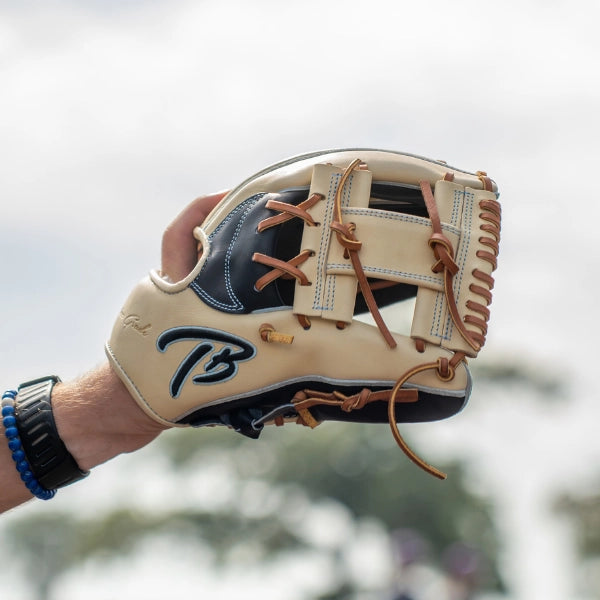
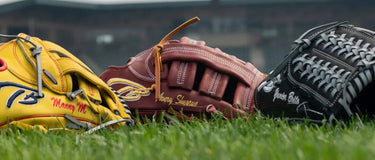
A new Tater custom glove isn't a game glove yet when it comes out of the box. It's built from premium leather that flexes without going soft, so it takes some work to form it to your hand. Here's how to break it in the right way, and how to keep it in shape once it's there.
Why a new glove feels stiff
Our gloves are built from premium, pro-grade leather. That leather is made to flex without softening, so the glove molds to your hand over the first season and then holds its shape for years. The stiffness you feel at first is the same thing that keeps the pocket from collapsing later. Break it in slowly and it forms to your hand and your position.
How to break in your glove, step by step
- Condition it lightly. Rub a thin layer of baseball glove conditioner into the leather and let it soak in overnight. A little goes a long way.
- Flex it by hand. Open and close the glove and work the pocket with your hand for a few minutes every day.
- Form the pocket. Put a ball in the pocket, close the glove around it and hold it shut with a glove wrap, a band or a lace. Leave it overnight, and repeat every night while you break it in.
- Play catch every day. Start with easy throws, then work up to harder catches. Catching is what really shapes the pocket.
- Move to live reps. Take ground balls, fly balls or bullpens, depending on your position, while you keep wrapping it at night.
- Re-condition when it looks dry. Add another thin layer only when the leather starts to look dry.
The glove is game-ready when the pocket holds its shape, the glove closes the same way every time and the web flexes the way you expect.
Break-in by position
| Glove | What to work on |
|---|---|
| Infield (I-Web and more) | Keep the pocket shallow for a quick transfer. Don't dig it too deep. |
| Outfield (H-Web and more) | A deeper pocket for fly balls and full-extension catches. Our outfield gloves are built for a quick break-in. |
| Pitcher's glove | Extra time flexing the web, so the glove closes cleanly without fighting your delivery. |
| Catcher's mitt | The most leather to work. Our mitts have a reinforced deep pocket, so expect it to take the longest, and catch plenty of bullpens in it. |
| First base mitt | More leather than a fielding glove, so give it extra time to close easily. |
Picking a web? See which one fits your spot in Glove Webs by Position.
What not to do
- No oven or microwave. Heat dries the leather out and can shrink it unevenly.
- No heavy oils. Skip mink oil, petroleum jelly and the like. They soak into the leather, make it heavy and soften it so the pocket won't hold its shape.
- Don't soak it. Never dunk the glove or pour water on it.
- Don't sleep on it. Use a wrap to hold the pocket instead.
- Don't rush it. Shortcuts break leather down. Steady work builds a glove that lasts.
Keeping it game-ready
- Wipe it down after every game or practice.
- Condition it lightly a few times during the season, whenever the leather looks dry.
- Check the laces regularly and get loose or worn ones fixed before they snap.
- Store it with a ball in the pocket, wrapped, somewhere that isn't too hot or too damp.
Build yours
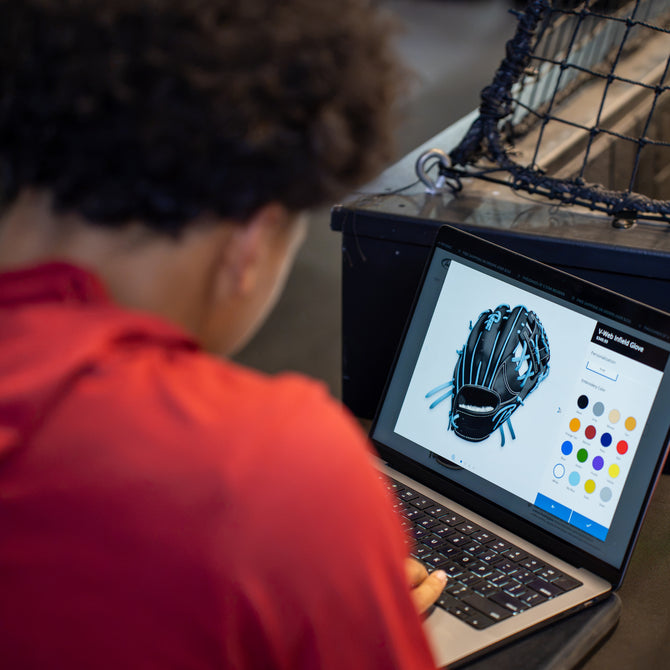
Every Tater glove is custom: you pick the web, the colors and the embroidery, and custom builds ship in about 8 to 10 weeks. More on what goes into them in our most underrated product. Ready to build? Start in the custom glove builder.
FAQ
How long does it take to break in a new glove?
It depends on the glove and how much you use it. Catching with it every day breaks it in fastest. Our gloves mold to your hand over the first season and hold their shape for years. Catcher's mitts and first base mitts have the most leather, so they take the longest.
Can I speed it up with an oven or microwave?
No. Heat dries the leather out and can shrink it unevenly. Conditioning, wrapping it overnight and catching with it every day is the way to do it.
What should I use to condition my glove?
A baseball glove conditioner, in thin layers. Avoid heavy oils like mink oil and petroleum jelly, which soften the leather too much and keep the pocket from holding its shape.
How should I store my glove?
With a ball in the pocket, wrapped, somewhere that isn't too hot or too damp.
Key takeaways
- A new Tater glove is built from premium leather that flexes without going soft, so it takes steady work to form it to your hand.
- Condition it lightly, wrap it with a ball in the pocket overnight and catch with it every day. Never use an oven, a microwave or heavy oils.
- Shape the pocket for your position: shallow for infield, deeper for outfield, and give catcher's and first base mitts the most time.



Pelota de espuma Tater® de Tater Baseball® | Pelotas para máquina de lanzar
$ 74.99
A partir de $ 51.99
/