



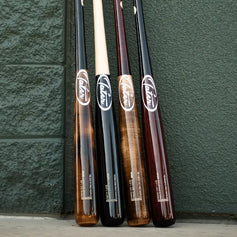


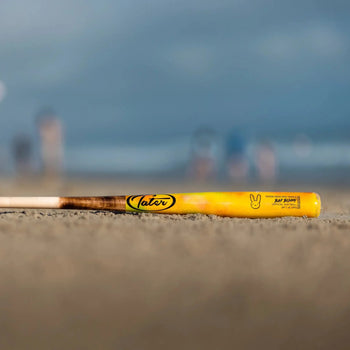
Filter and sort 4 products
 Tater-BB34 Official Softball Wood Bat From $ 149.99 /
 Tater-SB34 Official Softball From $ 149.99 /
 Tater-SB34 Torpedo Official Softball Wood Bat From $ 154.99 /
 Tater® LGND34 Softball Wood Bat From $ 149.99 /
Frequently Asked Questions
Are wood softball bats legal in regulation play?
Wood softball bats are legal in some leagues but not others — and the rules vary significantly between ASA/USA Softball, USSSA, NSA, and rec leagues. Always confirm with your specific league rulebook before using a wood bat in regulation play. Tater softball wood bats are designed primarily for training, batting practice, and leagues that allow wood. They're not built to ASA composite-bat specs.
What's the difference between Tater's two softball wood bat models?
The BB34 is a larger-barrel, power-leaning softball wood bat built for hitters who want maximum mass through contact. The SB34 is a thinner-profile, contact-leaning build for hitters who prioritize barrel control and bat speed. Both are 34" — the standard softball wood bat length — and both are built from the same pro-grade wood as our baseball bats at our Cheshire, Connecticut shop.
Can I use a softball wood bat for training even if my league doesn't allow it in games?
Yes — most serious softball players use wood for training even when their league requires composite or aluminum in games. Wood builds better mechanics because the smaller sweet spot and harder feedback expose weak spots in your swing that metal hides. Train with wood, play with whatever your league requires. The mechanics transfer.
What size softball wood bat should I order?
Standard slow pitch softball wood bats are 34 inches long with a 28 oz weight (the league-standard sizing across NSA, USA Softball, USSSA, ASA, and most rec leagues). The BB34 and SB34 are both built to that 34"/28 oz spec. The difference between models is barrel profile, not length — BB34 has a larger power-leaning barrel; SB34 has a thinner contact-leaning profile. Slow pitch hitters who play multiple leagues typically settle on one 34"/28 oz bat that fits their swing style.
Are Tater softball wood bats legal in competitive play?
Wood softball bats are legal in some leagues but not all — and the rules vary significantly between ASA/USA Softball, USSSA, NSA, NCAA, and rec leagues. Always confirm with your specific league rulebook before using a wood bat in regulation play. Most rec leagues that allow wood approve our 34"/28 oz softball wood bats; some competitive leagues require ASA composite or stamped metal. Even in leagues where wood isn't permitted in games, our softball wood bats are widely used for batting practice, training, and mechanics development — wood teaches the mechanics aluminum lets you skip.
What types of wood are Tater bats made from?
Hard maple and yellow birch — both MLB-grade. Maple has been the pro standard for over 20 years: densest, hardest hitting surface, biggest pop on clean contact, but a smaller sweet spot and less forgiveness on mis-hits. Birch sits between maple and ash — similar density to maple with more flex on impact, which makes it more forgiving on mis-hits and a smart starting point for hitters transitioning from metal to wood. Read the full breakdown in our Maple vs Birch vs Ash guide at /blogs/the-lumber-yard/differences-between-maple-birch-and-ash-bats.
Do you offer discounts for team or bulk orders?
Yes — team and bulk pricing is available, typically starting at 12 bats. Contact our team sales desk with your spec, roster size, and timing through /pages/contact-us and we'll send a custom quote within one business day. The more bats in the order, the better the per-unit pricing scales.
What is the warranty on Tater wood bats?
30-day limited warranty on structural cracking under normal field use. To qualify, the bat must be a 2021 model year or later, you must be the original purchaser with proof of purchase from an authorized Tater dealer, and you must have followed our hitting guidelines (no cage-style dimpled balls, no storage in extreme heat or cold like a car trunk, no excessive moisture exposure). Full warranty terms and care guidelines at /pages/tater-wooden-bat-warranty.
Why are wood bats cupped at the end?
Cupping is a small concave dish drilled into the end of the barrel. It removes a few grams of mass from the very tip, which shifts the bat's balance point slightly toward the hands and makes the swing feel quicker through the zone. Tater hand-cups each bat, and our process allows for variable cup depths to dial in feel without compromising end-cap strength — which actually reduces the risk of chips and cracks on inside pitches.
What is the black dot on the handle?
Every Tater maple and birch bat carries an ink dot near the handle as proof of MLB-grade slope-of-grain certification. The ink dot's bleed pattern reveals whether the wood grain runs cleanly along the bat's long axis — a tight bleed means safe, MLB-spec slope; a fast bleed means rejected billet. The dot is the visible proof every bat passed inspection before leaving our shop.
Wood Softball Bats — Pro-Grade Slow Pitch
Tater wood softball bats are built from the same MLB-grade hard maple we use for our baseball bats — just sized for slow pitch. The 34" length and 28 oz weight match the slow pitch sweet spot.
Pick your profile:
- SB34 Balanced — thin profile, balanced feel, built for contact hitters and gap shots
- BB34 — larger barrel, balanced 28 oz, built for power
- SB34 Torpedo — barrel-loaded torpedo design, forgiveness + balanced swing
- LGND34 (ASA Approved) — end-loaded power profile, similar to the Corndog, ASA tournament-legal
Slow pitch wood teaches better swings. Wood softball bats demand barrel discipline that aluminum doesn't. They're the right pick for slow pitch rec leagues, training sessions, and any wood-allowed tournament play.
Standard build time: 2–3 weeks. All bats hand-finished in Cheshire, Connecticut.


