





Every hitter who plays past high school eventually swings wood. If you've spent your career with a BBCOR or USSSA metal bat, the first swing on a wood bat is the most useful and most frustrating moment in your hitting career.
Useful because wood teaches you the truth — every mishit, every weak swing, every off-balance contact gets reported back immediately. Frustrating because the bat doesn't bail you out the way aluminum did. Metal hides mistakes. Wood doesn't.
What changes when you swing wood for the first time
The sweet spot is smaller
A BBCOR metal bat has a sweet spot roughly 6-8 inches long thanks to engineered alloy walls. A wood bat sweet spot is more like 2-3 inches. Outside that zone, the ball dies. What this teaches: where the barrel actually is.
Mishits sting
Hit a metal bat off the end and you feel slight vibration. Hit a wood bat off the end on a cold day and your hands hurt. The pain isn't a flaw — it's the bat telling you the truth.
Pop is real but not automatic
Crushed contact on wood feels different — sharper crack, cleaner trajectory. Bad contact dies. The ball doesn't travel the way it does on aluminum mishits.
Bats break
Aluminum dents but rarely shatters. Wood — especially maple — can break on a single bad inside pitch. Birch splits before it shatters.
What to pick: spec by spec
Length
Same length you swing in metal. If your BBCOR is 33", your first wood should be 33".
Drop weight
If you swing BBCOR (-3), swing wood at -3. If you're transitioning from USSSA (-5 or -8), start with -5 wood for the first month and graduate to -3 once your swing speed adjusts.
Turn model
Start with a 271 (Tater X24 Pro) or a balanced 110/I-13 (Tater X4 Pro). These are safest because of the balanced swing weight, medium barrel, comfortable knob, and medium handle. Save end-loaded power bats (243, XL5, CB15) and specialty profiles (torpedo, U-knob, knobless) for after 4-6 weeks on the standard.
Wood species
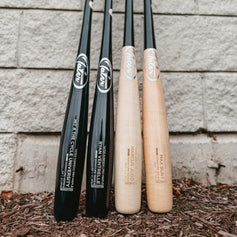
Pick birch first. Maple is what the pros swing, but maple also punishes mishits hardest — denser barrel, harder vibration on bad contact, catastrophic snap when it breaks. Birch flexes more on impact, softens the sting on mishits, and splits gradually when it breaks. Hit birch for a season, learn what wood actually feels like, then graduate to maple. More in our maple vs birch vs ash guide.
What to practice differently
- Aim for the barrel center. Stop trying to "get it on the bat" and start trying to "drive through the center of the barrel."
- Get inside on inside pitches. Mishit your hands inside on metal, the ball still flies. On wood, the bat breaks.
- Stop swinging at marginal pitches. Wood penalizes bad pitch selection harder than metal.
The transition timeline
| Phase | Time | What to expect |
|---|---|---|
| Initial shock | First 2 weeks | Stings on mishits, pop seems weaker than metal. |
| Barrel learning | Weeks 3-6 | Starting to feel the sweet spot. Mishits decreasing. |
| Real contact | Weeks 6-10 | Solid contact feels great. Wood sound is addictive. |
| Wood preference | 10+ weeks | You prefer wood. Going back to metal feels wrong. |
Three Tater bats to start with
- Easiest landing: Tater X24 Pro in birch.
- For contact hitters: Tater X4 Pro in birch.
- For new power hitters: Skip end-loaded profiles for your first. Start balanced.
If you're not sure, the Bat Finder walks through it.
What it costs
Custom Tater bats start at $149 and ship in 2-3 weeks. In-stock bats ship in 2-3 business days. Realistic budget: plan for 2-3 wood bats per season.
FAQ
What's the best first wood bat for a player coming from metal?
The 271 turn profile in birch. Balanced swing weight, medium barrel for forgiveness, flared knob, medium handle. Birch (vs maple) gives more flex on impact and a split-rather-than-shatter failure mode. The Tater equivalent is the X24 Pro in birch.
Should I pick maple or birch for my first wood bat?
Birch, in most cases. Maple has higher density and more pop but is less forgiving on mishits. Birch flexes more, softens sting, and splits gradually when it breaks. Hit birch for your first season, then graduate to maple.
Will swinging wood make me a better metal-bat hitter?
Yes — that's why coaches use wood as a developmental tool. Wood forces better barrel awareness, tighter pitch selection, and more consistent swing mechanics. Hitters who train on wood for several months and return to metal almost universally report being noticeably better hitters with both.
Tater Baseball builds custom wood bats in Connecticut. Start with a 271 turn in birch (X24 Pro) at the Custom Wood Bat Builder.




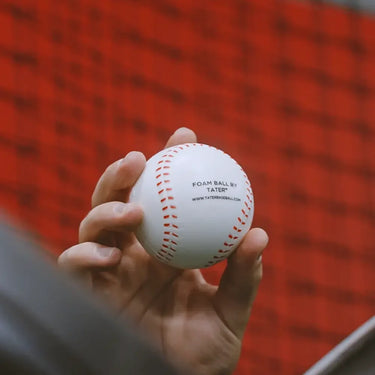
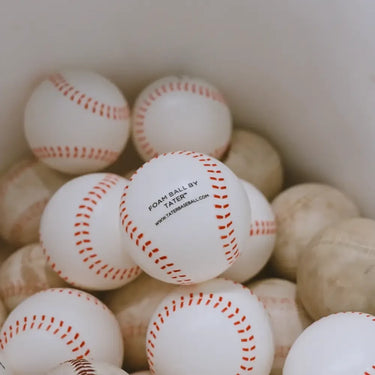


Pelota de espuma Tater® de Tater Baseball® | Pelotas para máquina de lanzar
$ 74.99
A partir de $ 59.99
/


