


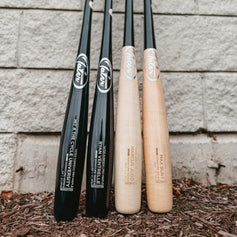
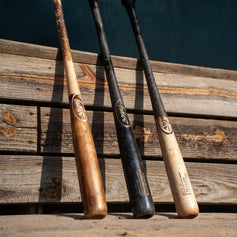


"Which should I be swinging?" is one of the questions we hear most. Our answer is always the same: what are you trying to improve? We never built a lineup of bats that all do the same thing. Every Tater training bat has a specific job.
Match the bat to the goal
| If you want to... | Reach for | Why |
|---|---|---|
| Fix a bottom hand that doesn't guide the barrel, or a weak top hand that lets it dump | One-hand work trains each hand on its own | |
| Tighten up a long, loopy swing | A shorter, heavier bat keeps your body stacked and connected | |
| Add bat speed | Teaches you to whip the barrel through the zone | |
| Work on strength, bat path and direction at once | Overload and split grip work in one tool |
Hand control: the RSD
When the bottom hand isn't guiding the barrel through the zone, or the top hand is weak and the barrel dumps, the RSD one-hand short bat covers both. One hand at a time shows exactly which side needs the work.
A long, loopy swing: the ML19
A swing that gets long needs something that keeps it connected. Swinging a shorter, heavier bat with two hands forces your body to stay stacked, which is what the ML19 two-hand short bat is for.
Bat speed: the SST
If the goal is bat speed, that's what we built the SST underload for. It teaches you to whip the bat through the zone.
The all-in-one: the G Force

The G Force 2.0 Split Grip overload is probably the most versatile training bat we make. It combines overload training with split grip work, so one tool trains strength, bat path, direction and how the body works through the swing.
Know why you're swinging it
Don't swing a training bat just because it's heavier, lighter or different. Know what you're trying to accomplish with it, then pick the bat built for that job.
See every trainer on our , and see how they rank in our . Still not sure? .
FAQ
Which training bat should I start with?
Start with what you want to improve. One-hand control points to the RSD, a long swing to the ML19, bat speed to the SST. If you want one bat that covers the most, start with the G Force 2.0 Split Grip overload.
Which Tater training bat is the most versatile?
The G Force 2.0 Split Grip overload. It combines overload training and split grip work, so it trains strength, bat path and direction in one tool.
Key takeaways
- Choose a training bat by what you're trying to improve, not by whether it's heavier or lighter.
- The RSD trains each hand on its own, the ML19 tightens a long swing, and the SST builds bat speed.
- The G Force 2.0 Split Grip overload is the most versatile: strength, bat path and direction in one tool.
Best seller


Best seller


30
31
32
+3
Best seller